Securing mobile temporary power across Hamilton County requires matching exact electrical draws to terrain-capable transport. A compact 20kW to 25kW towable unit fits light residential framing, masonry mixers, and…
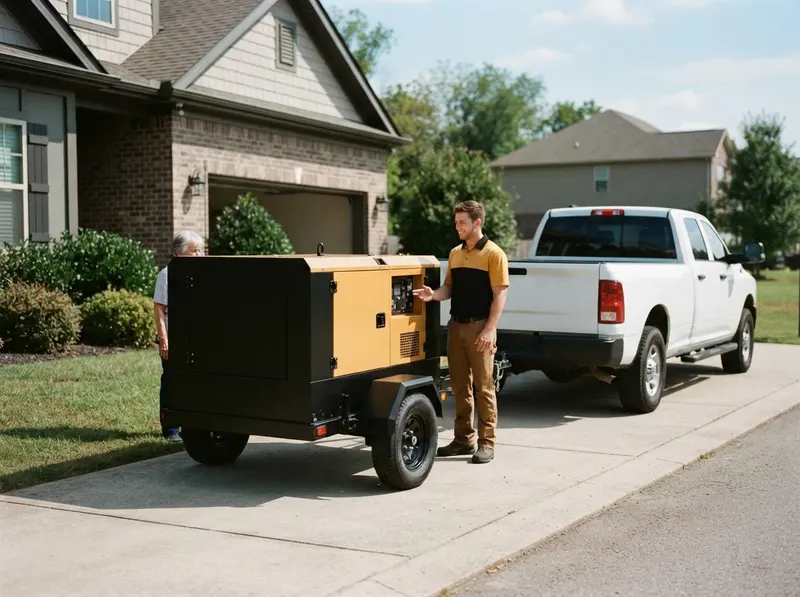
Securing mobile temporary power across Hamilton County requires matching exact electrical draws to terrain-capable transport. A compact 20kW to 25kW towable unit fits light residential framing, masonry mixers, and temporary job trailers in tight infill zones like Highland Park, St. Elmo, or the Southside Historic District where utility drops are offline. For larger commercial pours, crane setups, or utility bypass work along the Tennessee River or manufacturing corridors in Brainerd and East Brainerd, 50kW to 150kW three-phase diesel units provide continuous prime power without nuisance overload trips. The functional trade-off centers on unit footprint versus continuous amperage: smaller 20kW units maneuver effortlessly into narrow urban driveways on Northshore or Red Bank hills, while 100kW+ units require broad turning radiuses, stable pad stabilization, and dedicated fuel truck logistics for prolonged runs.
Site topography directly dictates deployment safety in the Chattanooga basin. Delivering mobile equipment up steep switchbacks toward Mountain Creek, Lookout Valley, or the lower ridges near Lookout Mountain Incline Railway requires commercial drop-hitches, heavy-duty wheel chocks, and proper leveling jacks to prevent fluid displacement. Standard fuel pickups and low-oil safety cutoffs on Tier 4 Final diesel engines will trip if a trailer is unhitched at an uncorrected grade steeper than 15 degrees. Placement procedures include level-ground positioning, dual-axle brake locking, and solid timber blocking beneath landing gear to prevent asphalt indentation or ground sinking in red clay after heavy seasonal rains.
Operating equipment requires distinction between run-time electrical demand and start-up surge. Induction motors on compressors, industrial welders, and large sump pumps demand momentary starting currents two to three times their operational ratings. Step 1: Calculate total continuous running amperage across your connected tool inventory. Step 2: Add the single largest surge requirement to avoid generator voltage drop. Step 3: Direct the tow vehicle onto compacted rock or firm gravel outside active haul lanes, block the wheels, verify ground-rod installation, and switch the voltage selector switch between 120V/240V single-phase or 208V/480V three-phase before firing the breaker.
Every job gets a firm, written price after a free on-site visit.
Tell us about your towable site generator rentals job in Chattanooga and we'll send a clear, written quote, usually the same day.
 ClearOut Dumpster Rental